Choosing between a shop and a home is one of the biggest decisions a property buyer in commercial vs. residential property in pakistan faces. Both options can build wealth, but they work in very different ways, from the money you need at the start to the rent you earn and the taxes you pay. This guide explains each property type, compares their costs, returns, and legal needs, and helps you pick the one that matches your budget. Whether you are a first-time buyer or an experienced investor, the sections below give you a clear picture. You can also browse the available projects at PrimeLand Properties.
What Is Commercial Property in Pakistan?
Commercial property is land or buildings used to earn business income, such as shops, offices, plazas, malls, and warehouses. In Pakistan, these properties are usually bought for rent or resale, and their value depends heavily on footfall, road access, and the strength of the surrounding market. Tenants are often businesses that sign longer agreements, which can make rental income more predictable. Mixed-use projects such as ABS Mall & Residency combine retail space with living areas under one roof. Because commercial units need larger budgets and careful location choice, buyers should study the area before committing.
What Is Residential Property in Pakistan?
Residential property is any home built for people to live in, including plots, houses, apartments, flats, and penthouses. In Pakistan, families buy residential property to live in, to rent out, or to hold for future value, since demand for housing grows alongside the population. Prices depend on location, size, nearby schools and hospitals, and the quality of utilities. Developments such as Pearl One Courtyard 2 show how a luxury residential complex with modern amenities is planned. Residential units generally cost less than commercial ones, which makes them easier for first-time investors to enter.
What Is the Difference Between Commercial and Residential Property?
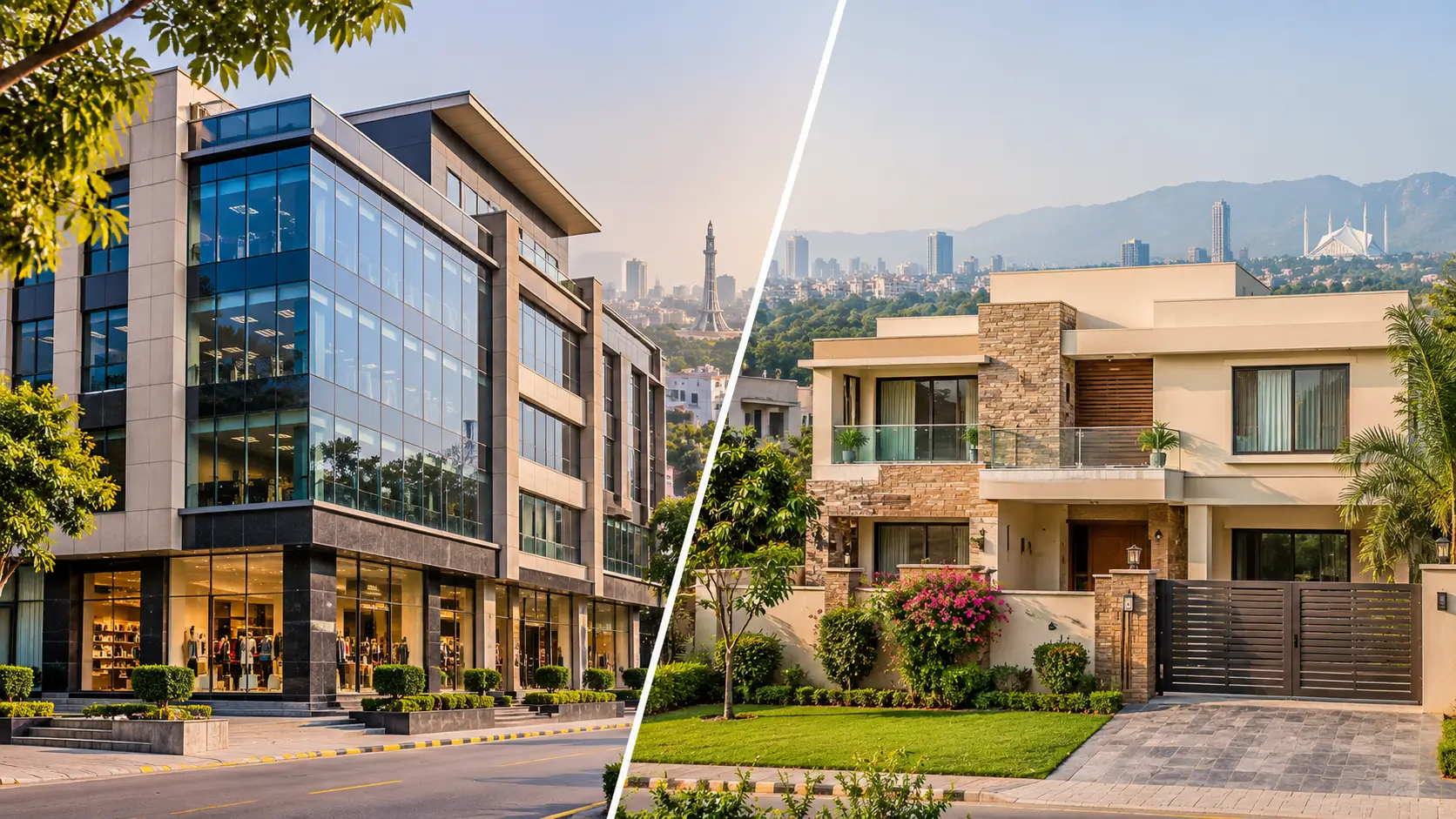
The main difference is the purpose of the property: residential property is meant for living, while commercial property is meant for doing business. This changes almost everything else, from the type of tenant and the length of the lease to the taxes, the approvals needed, and the way the price is set. A project like Pearl One Tower, an iconic tower with panoramic city views, shows how both uses can be planned within one development. Understanding this basic split helps you decide which type fits your goals before you compare prices.
Commercial vs. Residential Property: Key Differences
Seen side by side, the two property types differ in cost, income, risk, and demand. Commercial property usually needs more money and carries higher vacancy risk, while residential property offers steadier demand and easier resale. The table below summarises the key points so you can compare them quickly before you decide.
| Factor | Commercial Property | Residential Property |
| Purpose | Business use | Living |
| Entry Cost | Higher | Lower |
| Rental Yield | Higher | Moderate |
| Lease Length | Longer | Shorter |
| Vacancy Risk | Higher | Lower |
| Resale Demand | Depends on location | Generally steady |
Types of Commercial Properties in Pakistan
Commercial property in Pakistan comes in several forms, and each one serves a different kind of buyer or tenant. Your choice depends on your budget, the location, and the kind of business demand in the area. The common types include:
- Shops and showrooms on main roads or inside markets
- Offices and corporate floors in towers and business centres
- Plazas and shopping malls with multiple retail units
- Warehouses, godowns and industrial units
- Hotels, restaurants and food courts
- Mixed-use buildings that combine retail and apartments
Types of Residential Properties in Pakistan
Residential property also comes in several forms, each suited to a different budget and lifestyle. Plots are popular with investors who want to hold land and build later, while ready houses suit families who want to move in quickly. Apartments and flats offer lower prices and shared facilities, and penthouses appeal to buyers who want premium living. Houses come in different sizes, such as 5, 8 and 10 marla homes, and some buyers choose farmhouses on larger plots. Always compare the location and utilities, not only the price, and watch the project walkthroughs on the PrimeLand Properties YouTube channel to see the layouts before you visit.
Commercial vs. Residential Property: Investment Potential
Investment potential depends on your goal. Commercial property can deliver higher rent and stronger price growth in busy areas, but it can also stay empty for months if the location or timing is wrong. Residential property usually offers steadier demand because people always need homes, and it tends to be easier to resell. Many investors hold both, using residential units for stable income and commercial units for growth. Whichever you choose, the quality of the location and the developer’s reputation will matter more than the property type itself.
Rental Income and Return on Investment
Commercial property usually earns a higher rental yield than residential property, since businesses pay more for space in busy locations. Residential rent is lower, but often more consistent, and tenants frequently stay longer in family homes. To estimate your return, divide the yearly rent by the purchase price, then add the expected rise in value. Remember to subtract maintenance, tax, and vacancy periods from your figure. Treat any promised returns with care, and check actual rents in the same area before you buy.
Initial Costs and Maintenance Expenses
Commercial property needs a larger starting budget, and its maintenance bills are often heavier too, covering security, lifts, parking, common areas, and service charges. Residential property costs less to buy and maintain, although apartments in large buildings also carry monthly maintenance fees. Remember the extra costs on top of the price, such as registration fees, stamp duty, legal fees, brokerage, and any society transfer charges. Ask the seller or developer for a written list of every charge, and keep a reserve for repairs so a sudden expense does not hurt your returns.
Is There Any Tax on Residential Property in Pakistan?
Yes, residential property is taxed in several ways. When you buy or sell, advance tax is collected under Sections 236K and 236C. For the 2026-27 tax year, filers pay a flat 1.25% as buyers and 2.75% as sellers, while non-filers pay much higher rates. Provincial authorities also charge annual property tax, and rental income is taxable too. Rates and rules change with each budget, so confirm current figures with the FBR, your provincial excise office, or a tax consultant before you sign anything.
Taxes on Commercial Property in Pakistan
Commercial property faces the same advance tax on purchase and sale as residential property, but other taxes can differ. Provincial property tax is often charged at higher rates on commercial buildings, and rental income from shops and offices is taxable. Depending on the province, commercial rent may also attract sales tax on services. Capital gains tax can apply when you sell for a profit, and non-filers pay much more than filers. Because the rules are detailed, ask a tax consultant to calculate the total cost before you invest in a commercial unit.
Legal Requirements for Buying Commercial and Residential Property
The legal steps are largely the same for both types: verify the seller’s identity, the title, the registry, and the mutation entry in the land record. Check the approved layout plan and NOC, and make sure no loan or court case is attached to the property. Commercial property needs extra checks, such as approval for commercial use, building plan sanction, and fire safety clearance. A written agreement on stamp paper and proper registration at the Sub-Registrar’s office complete the process. Have a property lawyer review your file before you make any payment.
Factors to Consider Before Choosing a Property
Choose based on your budget, your goals, and how much risk you can accept. Think about how long you can hold the property, whether you need regular income or long-term growth, and how much time you have to manage tenants. Study the location, the developer’s delivery record, the payment plan, and the expected resale demand. Visit the site and speak to people already living or working nearby. If your budget is limited, a smaller residential unit is often a safer start than a commercial one in an unproven area.
Final Thoughts
Neither property type is better in every situation. Commercial property suits investors who have a larger budget and want higher rent, while residential property suits those who want steady demand and a lower starting cost. Compare the location, taxes, legal status, and your own goals before you decide. If you want to discuss available projects or ask about documents, reach out through the Contact Us page. This article is general information, not legal, tax, or financial advice, so confirm current rates and rules with a qualified professional before you invest.
Frequently Asked Questions
What is the main difference between commercial and residential property?
Residential property is used for living, while commercial property is used for business. This affects the price, rent, taxes, and approvals needed.
Which is more profitable in Pakistan, commercial or residential property?
Commercial property usually offers higher rent and growth, but it carries more risk and needs a bigger budget. Residential property offers steadier, lower-risk returns.
Is commercial property taxed more than residential property in Pakistan?
Often yes, because provincial taxes can be higher and extra taxes may apply to commercial rent. Advance tax on purchase and sale is the same for both types.
Can I use a residential property for business in Pakistan?
Not without permission. You usually need approval from the relevant authority or housing society to convert the use to commercial.
Which is better for first-time investors?
Residential property is generally easier for beginners, thanks to lower costs and steadier demand. Choose based on your budget and goals.